Pagine

sabato 20 novembre 2010

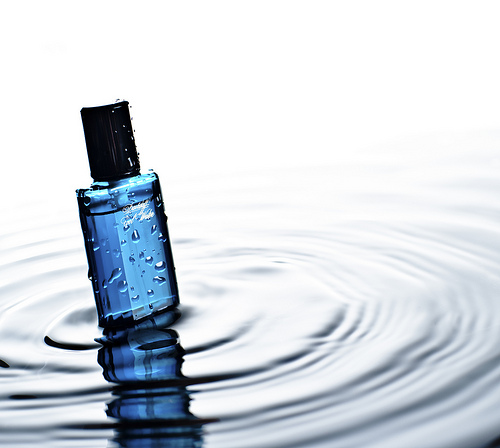
Cool Water


Cool Water is a perfume introduced in 1988 by Davidoff, now a part of Coty Prestige. The perfumer is Pierre Bourdon. Cool Water contains a blend of lavender, jasmine, oakmoss, musk, sandalwood.

The Dark Superhero

The Dark Knight

Batman is a fictional character created by the artist Bob Kane and writer Bill Finger. A comic book superhero, Batman first appeared inDetective Comics #27 in May 1939, and since then has appeared in many of DC Comics’ publications. Originally referred to as "the Bat-Man" and still referred to at times as "the Batman", he is additionally known as "The Caped Crusader", "The Dark Knight", and "The World's Greatest Detective".
In the original version of the story and the vast majority of retellings, Batman's secret identity is Bruce Wayne, an American millionaire (later billionaire) playboy, industrialist, and philanthropist. Having witnessed the murder of his parents as a child, he swore revenge on crime, an oath tempered with the greater ideal of justice. Wayne trains himself both physically and intellectually and dons a bat-themed costume in order to fight crime. Batman operates in the fictional American Gotham City, assisted by various supporting characters including his crime-fighting partner, Robin, his butler Alfred Pennyworth, the police commissioner Jim Gordon, and occasionally the heroine Batgirl. He fights an assortment of villains such as the Joker, the PenguinTwo-FacePoison Ivy and Catwoman, influenced by the characters' roots in film and pulp magazines. Unlike most superheroes, he does not possess any superpowers; he makes use of intellect, detective skills, science and technology, wealth, physical prowess, an indomitable will and intimidation in his continuous war on crime.


A Fantastic Reflection in Nature - Mirage

A mirage is a naturally occurring optical phenomenon in which light rays are bent to produce a displaced image of distant objects or the sky. The word comes to English via the French mirage, from the Latin mirare, meaning "to look at, to wonder at". This is the same root as for "mirror" and "to admire".

In contrast to a hallucination, a mirage is a real optical phenomenon which can be captured on camera, since light rays actually are refracted to form the false image at the observer's location. What the image appears to represent, however, is determined by the interpretive faculties of the human mind. For example, inferior images on land are very easily mistaken for the reflections from a small body of water.

Mirages can be categorized as "inferior" (meaning lower), "superior" (meaning higher) and "Fata Morgana", one kind of superior mirage consisting of a series of unusually elaborate, vertically-stacked images, which form one rapidly-changing mirage.

More information about Mirage


The uppermost inset frame shows an inferior mirage of the
Farallon Islands. The second inset frame is the Farallon
Islands with a green flash on the left-hand side.
The two lower frames and the main frame all show
superior mirages of the Farallon Islands.


The cause of an inferior mirage (light curvature greatly exaggerated)

Eco technology - Heat Reflective Glass

HEAT REFLECTIVE GLASS

Also known as Energy Efficient Glass, or low-e glass, heat reflective glass has a special metallic coating on one side. This very thin coating gives a slight brown or grey tint to the glass and allows the suns energy to pass through from the outside while reducing heat loss from inside the home. Heat reflective glass by itself does not improve insulation; it has to be part of a double or triple-glazed unit.

There are two types of heat reflective glass; the first is sputtered or soft-coat glass, this the coating is easily damaged by air or moisture, so it can only used on the inside of sealed double–glazed or triple-glazed units.

The second type is pyrolytic or hard-coat glass. Although this does not have to be sealed into a double–glazed unit, it is a less effective at keeping heat out of your conservatory in the summer.

Heat reflective glass will also reduce glare on really bright summer days, but still allow light into your conservatory on dull days.

More information about Heat Reflective Glass


venerdì 19 novembre 2010

Anti - reflection Battle of Stealth Aircraft

BACKGROUND

The first true "stealth" aircraft may have been the Horten Ho 229 flying wing fighter-bomber, developed in Germany during the last years of WWII. In addition to the aircraft's shape, which may not have been a deliberate attempt to affect radar deflection, the majority of the Ho 229's wooden skin was bonded together using carbon-impregnated plywood resins designed with the purported intention of absorbing radar waves.

Modern stealth aircraft first became possible when Denys Overholser, a mathematician working for Lockheed Aircraft during the 1970s, adopted a mathematical model developed by Petr Ufimtsev, a Russian scientist, to develop a computer program called Echo 1. Echo made it possible to predict the radar signature an aircraft made with flat panels, called facets. In 1975, engineers at Lockheed Skunk Works found that an airplane made with faceted surfaces could have a very low radar signature because the surfaces would radiate almost all of the radar energy away from the receiver. Lockheed built a model called "the Hopeless Diamond", so-called because it resembled a squat diamond, and looked too hopeless to ever fly. Because advanced computers were available to control the flight of even a Hopeless Diamond, for the first time designers realized that it might be possible to make an aircraft that was virtually invisible to radar.

More information about stealth aircraft

B-2 Spirit stealth bomber of the U.S Air Force

The F-35 Lightning II was developed by
United States, and United Kingdom

USAF F-22 Raptor stealth fighter of the 27th Fighter Squadron

sabato 13 novembre 2010

Look under the skin


X-radiation (composed of X-rays) is a form of electromagnetic radiation. X-rays have a wavelength in the range of 0.01 to 10 nanometers, corresponding to frequencies in the range 30 petahertz to 30 exahertz (3 × 10¹⁶ Hz to 3 × 10¹⁹ Hz) and energies in the range 120 eV to 120 keV. They are shorter in wavelength than UV rays and longer than gamma rays. In many languages, X-radiation is called Röntgen radiation, after Wilhelm Conrad Röntgen, who is generally credited as its discoverer, and who had named it X-radiation to signify an unknown type of radiation. Correct spelling of X-ray(s) in the English language includes the variants x-ray(s) and X ray(s). XRAY is used as the phonetic pronunciation for the letter x.
X-rays from about 0.12 to 12 keV (10 to 0.10 nm wavelength) are classified as "soft" X-rays, and from about 12 to 120 keV (0.10 to 0.01 nm wavelength) as "hard" X-rays, due to their penetrating abilities.
Hard X-rays can penetrate solid objects, and their most common use is to take images of the inside of objects in diagnostic radiographyand crystallography. As a result, the term X-ray is metonymically used to refer to a radiographic image produced using this method, in addition to the method itself. By contrast, soft X-rays can hardly be said to penetrate matter at all; for instance, the attenuation length of 600 eV (~ 2 nm) x-rays in water is less than 1 micrometer. X-rays are a form of ionizing radiation, and exposure to them can be a health hazard.
The distinction between X-rays and gamma rays has changed in recent decades. Originally, the electromagnetic radiation emitted by X-ray tubes had a longer wavelength than the radiation emitted by radioactive nuclei (gamma rays). Older literature distinguished between X- and gamma radiation on the basis of wavelength, with radiation shorter than some arbitrary wavelength, such as 10−11 m, defined as gamma rays. However, as shorter wavelength continuous spectrum "X-ray" sources such as linear accelerators and longer wavelength "gamma ray" emitters were discovered, the wavelength bands largely overlapped. The two types of radiation are now usually distinguished by their origin: X-rays are emitted by electrons outside the nucleus, while gamma rays are emitted by the nucleus.


Change your aspect!

You can change your  appearance only through some devices like your dress or the makeup!


The use of sequins in fashion


Sequins (paillettes) are disk-shaped beads used for decorative purposes. They are available in a wide variety of colors and geometrical shapes. Sequins are commonly used on clothingjewelrybags and other accessories. Large sequins, fastened only at the top, have been used on billboards and other signage, particularly prior to the development of lighted and neon signs. Signs made with sequins were called schmaltz, as were the sequins themselves in that context.
Evidence exists that gold sequins were being used as decoration on clothing or paraphernalia in the Indus Valley as early as 2500BC , during the Kot Diji phase.
Although coins are still used as sequins in some cultures, modern sequins tend to be made of plastic. They may also be referred to as spangles, paillettes, or diamantes. Paillettes themselves are commonly very large and flat. Sequins may be stitched flat to the fabric, so that they do not move, and are less likely to fall off; or they may be stitched at only one point, so that they dangle and move easily, to catch more light. Some sequins are made with facets, to increase their reflective ability.


Nail polish
Nail polish (or nail varnish) is a lacquer applied to toenails and or fingernails for appearance, but also as nail protection. Polishing without adding chemical layers is called buffingNail polish has been traditionally worn by women, but has recently become more popular with men. Traditional colors for nail polish were red, pink and brown, and it can now be found in virtually any color. French manicures traditionally mimic the color of natural nails, using a clear, beige or soft pink polish on most of the nail with a white finish at the tips.

Black has been a popular color of nail polish with goths and punks of both genders since the 1970s, and has recently gained acceptance as a color for both men and women.
Some types of polish are advertised to cause nail growth, make nails stronger, prevent nails from breaking, cracking and splitting and stop nail biting. Nail polish may be applied as one of several components in a manicure. However, some nail treatments contain ingredients such as ammonium hexafluorophosphate